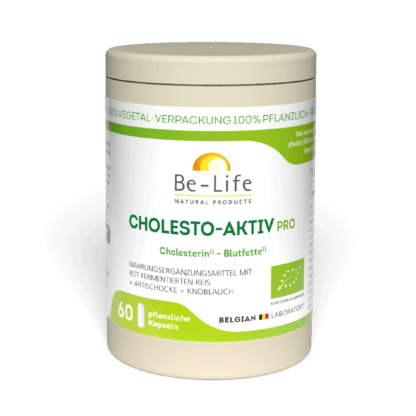
CHOLESTO-AKTIV PRO
Red fermented rice + artichoke + garlic
Artichoke extract is obtained from the leaves of the artichoke (Cynara scolymus), a thistle plant widespread in the Mediterranean region. Characteristic are its bitter compounds, above all cynarin, as well as other compounds such as cynaroside and flavonoids.
Traditionally, artichoke is associated with digestion and the liver. In naturopathy, bitter compounds have long been among the classics when it comes to digestion.
Steckbrief
Artichoke leaves are traditionally used in connection with digestive complaints and liver function. They are primarily attributed with a stimulating effect on bile production, which plays a role in fat digestion. This traditional use forms the basis of many preparations.
A potential influence of the compound cynarin on lipid metabolism is also being discussed. Scientific evidence on this is limited and inconclusive, meaning that no verified health-related claims can be derived from it. Within the scope of European health claims regulations, artichoke extract carries no approved health claims.
Artichoke extract is available as capsules, tablets, or liquid extract, often standardized to the content of cynarin or total bitter compounds. As a bitter preparation, it is traditionally taken in connection with meals.
The appropriate dosage depends on the specific preparation. Please follow the manufacturer’s recommended intake.
Artichoke extract is generally considered well tolerated in standard amounts. Mild gastrointestinal discomfort has been reported occasionally.
In cases of bile duct obstruction or gallstones, artichoke should not be used without medical advice, as stimulating bile flow can be unfavorable in these situations. Artichoke belongs to the Asteraceae family. Individuals with a known allergy to Asteraceae plants (such as mugwort or chamomile) should take this into account.
Red fermented rice + artichoke + garlic
Artichoke is traditionally used in connection with digestion and liver and gallbladder function. This use is based on long-standing tradition; there are no validated health claims under EU regulations.
The bitter compounds it contains, especially cynarin, are responsible for this. Bitter compounds are traditionally valued botanicals when it comes to digestion.
In cases of gallstones, bile duct obstruction, or an allergy to Asteraceae plants, taking it without consulting a doctor is not advised.
Fachliche Prüfung
Prof. Dr. med. Dr. phil. Martin Hörning
Arzt, Professor i.R. und Mitbegründer von sanitas
Seit 40 Jahren beschäftigt er sich intensiv mit den Themen Prävention, Gesundheitsförderung, Achtsamkeit, Longevity und Naturheilverfahren. In Herstelle führt er eine kleine Privatpraxis.