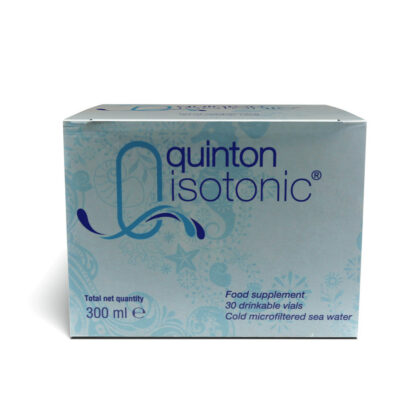
Quinton Isotonic Marine Plasma
71 % spring water + 29 % cold microfiltered (0.22 µ) seawater according to René Quinton
Chloride is the term used for the negatively charged ion of the element chlorine. As a component of salts, primarily table salt (sodium chloride), it occurs in many foods and in virtually all bodily fluids. Seawater is also rich in chloride.
Within the body, chloride is among the most essential electrolytes. It plays a role in fundamental processes such as fluid and electrolyte balance and digestion.
Steckbrief
Chloride is an essential mineral that the body requires for several fundamental functions. A health claim is authorized in the EU for chloride: chloride contributes to normal digestion by the production of hydrochloric acid in the stomach.
Furthermore, together with sodium and potassium, chloride is involved in maintaining fluid and electrolyte balance as well as the osmotic balance of cells. An isolated chloride deficiency is rare with a balanced diet, as the supply is generally covered by table salt in food.
Chloride is almost always consumed in sufficient quantities through a normal diet, primarily via table salt. Targeted supplementation with chloride is therefore generally not necessary for healthy people.
Electrolytes, which include chloride, become more relevant in special situations with increased losses, such as heavy sweating, persistent vomiting, or diarrhea. In such cases, it is usually a matter of balanced replacement of several electrolytes and fluids, not chloride alone.
Chloride from a normal diet is harmless. Since it is predominantly consumed as table salt, the sodium content is of greater significance than the chloride when considering the amount: a permanently very high intake of table salt is considered unfavorable.
Significant shifts in chloride levels usually occur in connection with other illnesses or severe fluid loss and should be medically clarified. For healthy people, a balanced diet is the most sensible foundation.
71 % spring water + 29 % cold microfiltered (0.22 µ) seawater according to René Quinton

100% cold microfiltered (0.22 μ) seawater according to René Quinton
Chloride is an electrolyte involved in fluid and electrolyte balance and is required for the formation of stomach acid. It thus contributes to normal digestion.
Generally not for healthy people. Chloride is almost always sufficiently consumed through table salt in a normal diet.
Primarily in table salt (sodium chloride) and thus in many foods. Seawater is also naturally rich in chloride.
Fachliche Prüfung
Prof. Dr. med. Dr. phil. Martin Hörning
Arzt, Professor i.R. und Mitbegründer von sanitas
Seit 40 Jahren beschäftigt er sich intensiv mit den Themen Prävention, Gesundheitsförderung, Achtsamkeit, Longevity und Naturheilverfahren. In Herstelle führt er eine kleine Privatpraxis.