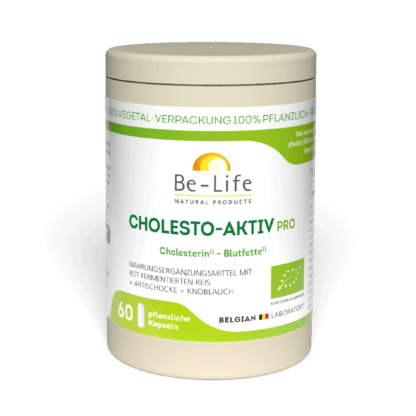
CHOLESTO-AKTIV PRO
Red fermented rice + artichoke + garlic
Red yeast rice, also known as red rice or by the name Hong Qu, is produced when rice is fermented with the mold fungus Monascus purpureus. This gives it its characteristic red color. In East Asian cuisine, it has long been used as a coloring agent, seasoning, and food.
For dietary supplements, red yeast rice is of interest primarily due to a naturally occurring constituent: monacolin K. Because of this substance, red yeast rice is subject to specific regulatory provisions in the EU, which are explained below.
Steckbrief
Red fermented rice is traditionally associated with cholesterol metabolism. The reason for this is the constituent monacolin K, which chemically corresponds to a specific cholesterol-lowering pharmaceutical active substance. This makes red rice a special case among dietary supplements, as its characteristic substance acts pharmacologically like a medication.
It is precisely for this reason that the European Food Safety Authority (EFSA) raised safety concerns, and a previously existing health claim was withdrawn. In the EU, only very low amounts of monacolin K from red fermented rice per daily portion are now permitted. This profile is therefore expressly intended for objective information and not as a recommendation for self-administered use.
In light of the legal situation and safety assessments, red fermented rice is not a dietary supplement for ill-considered self-administration. If at all, its use in connection with elevated cholesterol levels should be medically supervised, particularly because cholesterol levels fundamentally belong in medical hands.
If you are considering such a product, consulting a doctor is the sensible first step, rather than following the dosage recommendation on the package. Blood lipid levels are monitored through medical examinations.
Because monacolin K acts like a cholesterol-lowering drug, similar adverse effects are also possible, including muscle discomfort and effects on the liver. These safety considerations were the reason for the stricter EU regulations.
Particular caution is advised when simultaneously taking statin-type cholesterol-lowering medications, as the effects can be cumulative. Red fermented rice is also unsuitable in combination with certain other medications as well as during pregnancy and breastfeeding. The fundamental rule applies: elevated cholesterol levels must be medically clarified and monitored, not treated independently.
Red fermented rice + artichoke + garlic
Monacolin K is a substance naturally produced in red fermented rice that chemically corresponds to a cholesterol-lowering pharmaceutical drug. Due to this medicinal property, red rice is subject to special regulations in the EU.
The European Food Safety Authority (EFSA) raised safety concerns, and an earlier health claim was withdrawn. Today, only very low amounts of monacolin K per daily portion are permitted.
No. Elevated cholesterol levels must be medically evaluated and monitored. Red fermented rice is not a substitute for medical treatment, and its use should only take place under medical supervision.
Fachliche Prüfung
Prof. Dr. med. Dr. phil. Martin Hörning
Arzt, Professor i.R. und Mitbegründer von sanitas
Seit 40 Jahren beschäftigt er sich intensiv mit den Themen Prävention, Gesundheitsförderung, Achtsamkeit, Longevity und Naturheilverfahren. In Herstelle führt er eine kleine Privatpraxis.