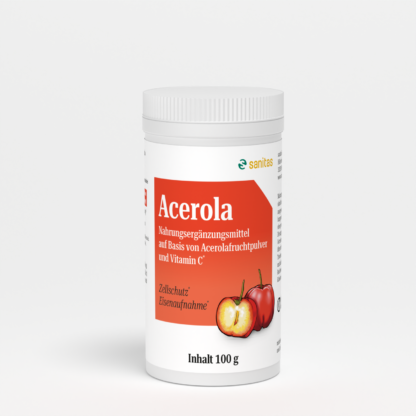
Acerola powder
Acerola powder + vitamin C
Acerola is the fruit of the acerola cherry (Malpighia emarginata), also known as the Barbados cherry or West Indian cherry. It originates from Central and South America and is prized above all for one of the highest natural vitamin C contents of any known fruit.
Because of this richness, acerola is often used as a natural alternative to synthetic ascorbic acid in dietary supplements. Besides vitamin C, the fruit also provides other secondary plant compounds.
Steckbrief
The health benefits of acerola are based primarily on its high content of natural vitamin C. Several health claims for vitamin C are approved in the EU. Vitamin C contributes, among other things, to:
From the perspective of many users, one advantage of acerola over isolated ascorbic acid lies in its natural combination with secondary plant compounds such as bioflavonoids. Whether this combination offers a measurable additional benefit compared to pure vitamin C has not been conclusively established scientifically.
Acerola is usually offered as a powder or in capsules, often standardized to a specific vitamin C content. The amount taken is based on individual vitamin C needs. For reference: the EU-established reference intake for daily consumption is 80 mg of vitamin C.
Since vitamin C is water-soluble and is not stored in the body to any significant extent, regular intake is advisable. Acerola powder can easily be stirred into water, juice, or muesli. Please follow the recommended intake stated on the product.
Vitamin C from acerola is generally considered well tolerated in typical amounts. Very high doses may cause gastrointestinal discomfort, such as loose stools, in sensitive individuals, as excess vitamin C is excreted via the intestines and kidneys.
People with a tendency toward kidney stones (oxalate stones) or an iron storage disorder should discuss a high additional vitamin C intake with their doctor. If you have a known allergy to acerola, you should refrain from taking it.
Acerola powder + vitamin C
Chemically, the vitamin C is identical. However, acerola provides the vitamin in natural combination with other plant compounds such as bioflavonoids. A clear, measurable advantage of this combination over pure ascorbic acid has not been conclusively proven scientifically, but for many users the natural origin is nonetheless a deciding factor.
Fresh acerola cherries are among the most vitamin C-rich fruits of all. The exact content varies depending on ripeness and processing. Standardized acerola products state the vitamin C content per serving.
Yes, regular intake within the recommended daily amount is common, since vitamin C is water-soluble and is not stored in the body. Very high amounts are not necessary to meet daily needs.
Fachliche Prüfung
Prof. Dr. med. Dr. phil. Martin Hörning
Arzt, Professor i.R. und Mitbegründer von sanitas
Seit 40 Jahren beschäftigt er sich intensiv mit den Themen Prävention, Gesundheitsförderung, Achtsamkeit, Longevity und Naturheilverfahren. In Herstelle führt er eine kleine Privatpraxis.